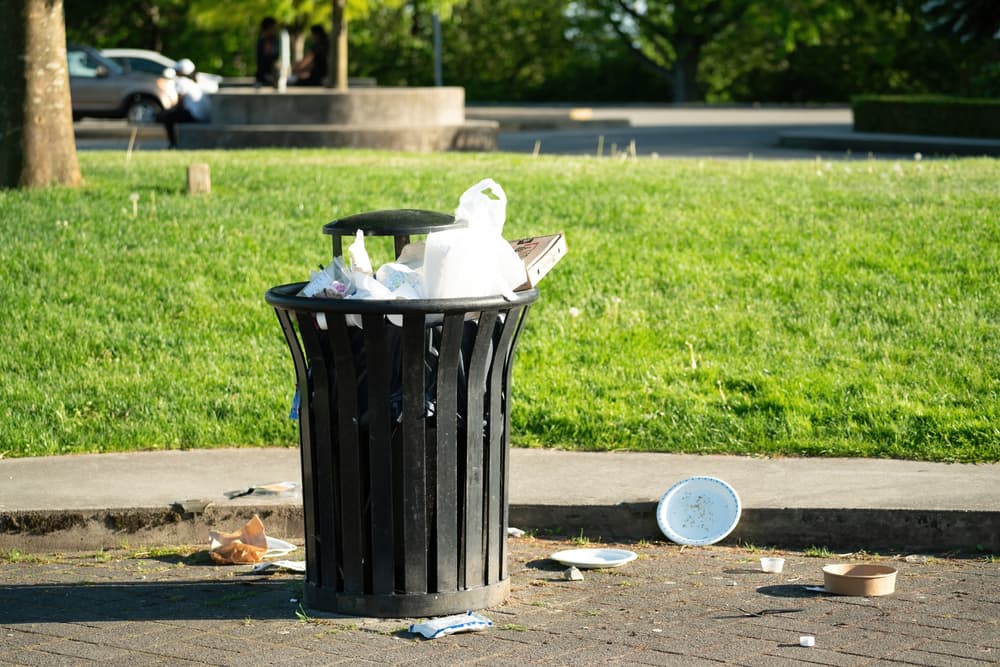
Across the nation, waste generation and littering has grown significantly over the past five decades. As with all pollutants, the best management practice is source control. For trash, this entails limiting trash generation and ensuring proper disposal. As a secondary approach to reduce its environmental impact, a variety of trash capture devices have been developed and installed at storm drain inlets, pipe outlets , and in open water. These devices play an important role in keeping debris and litter out of Hawaiʻi’s waterways. Learn more about the different types used by the Hawaiʻi Department of Transportation here on Oʻahu and by other municipalities across the country.
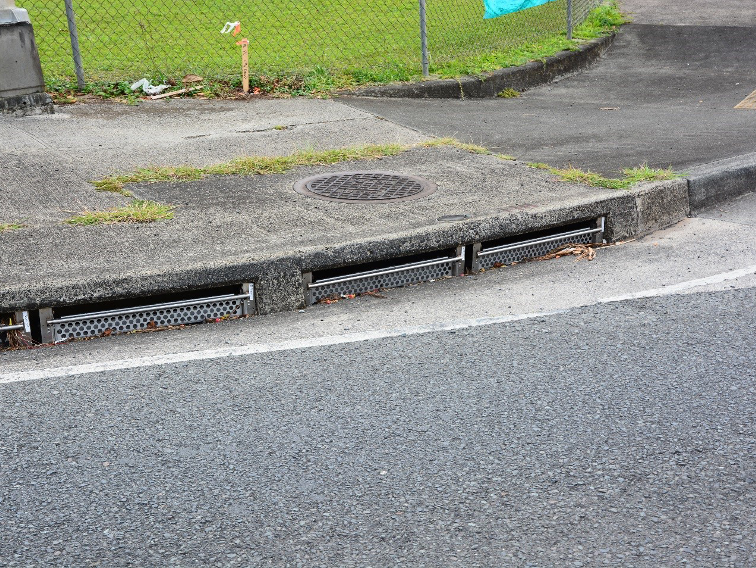
Automatic Retractable Screens – These screens are placed at storm drain inlets to stop litter and debris from entering the storm drain system. A spring mechanism allows the screens to open during heavy rain for proper drainage. The design lets them stay in place year-round and even makes curbside debris collection easier for street sweepers. These automatic retractable screens are the most commonly installed trash capture devices along Oʻahu’s highways!
Drain Inlet Filters – Like automatic retractable screens, drain inlet filters capture trash from storm water runoff before or once it enters the inlets and prevent the trash from moving farther through the storm water drainage system . These filters come in different forms, including geotextile filter fence, witch’s hat, inbox protection, fiber rolls, sandbags, rock bags, and snake bags. Each is designed to trap debris while still allowing storm water to drain efficiently. There are several drain inlet filters installed within HDOT’s storm water drainage system to treat runoff and protect nearby waterways.
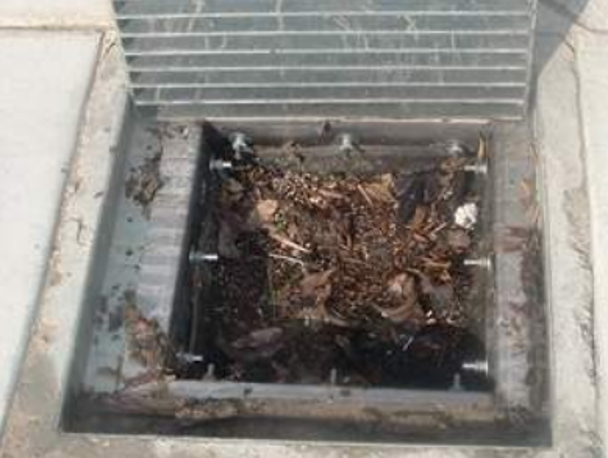
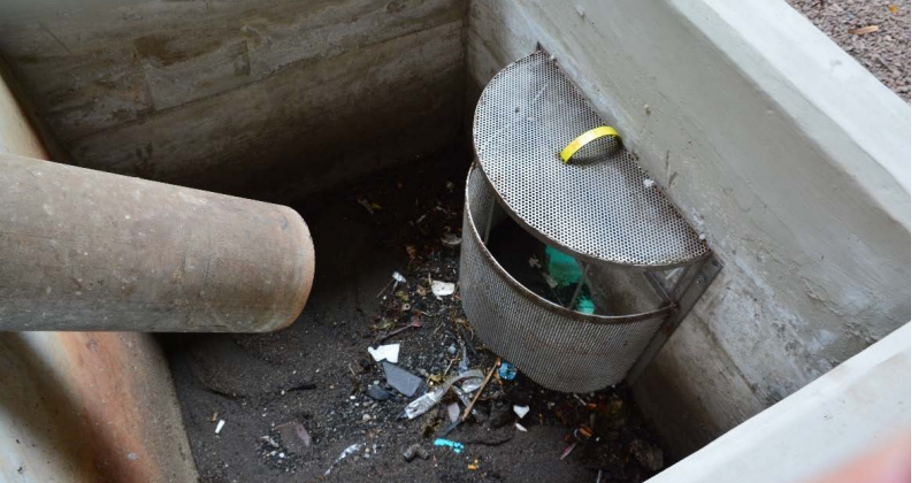
Downspout Filter Boxes – Along elevated highways and bridges, drain inlets connect to pipes that carry storm water runoff, along with trash and other pollutants, down the roadway pillars to the ground below. A downspout filter box is installed within the pipe system to capture trash, debris, and sediment before it enters the storm drain. Some filter boxes also contain a boom to collect oil and grease from roadways. Downspout filter boxes can be found along many of Oʻahu’s freeways
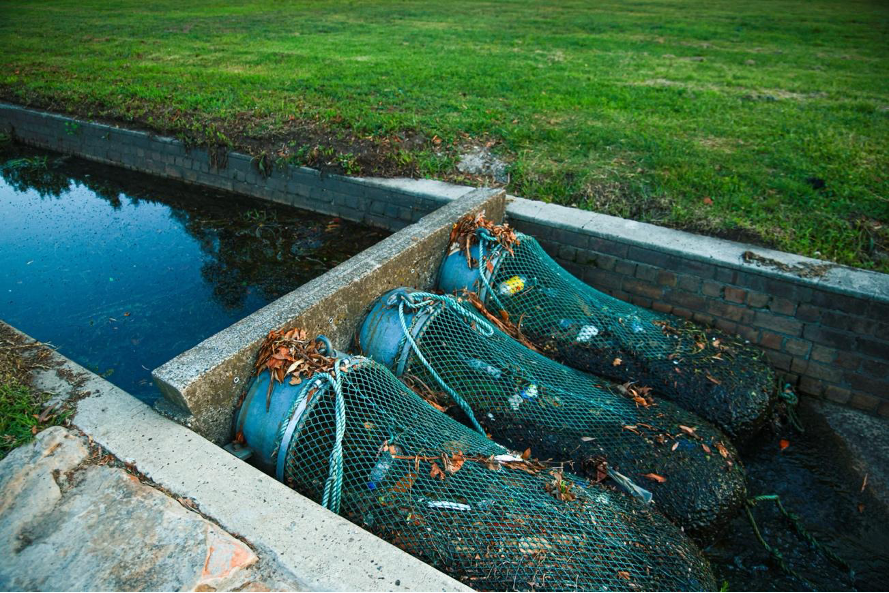
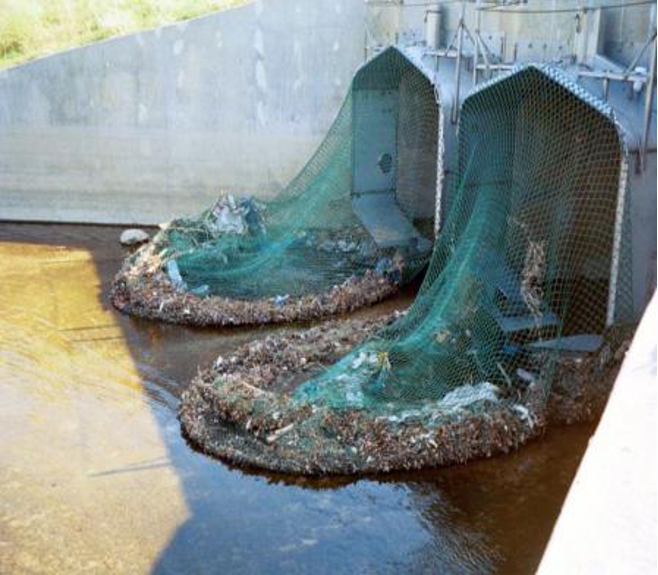
End-of-Pipe Netting – Large disposable nets are placed at storm drain outlets to catch trash while allowing water to flow through. Once the nets are full, they are removed and disposed of properly. This simple system helps prevent large amounts of debris from reaching streams and the ocean. Although it has been determined that end-of-pipe netting is not currently an efficient option for Oʻahu’s storm water system, you might see this netting used in other states.
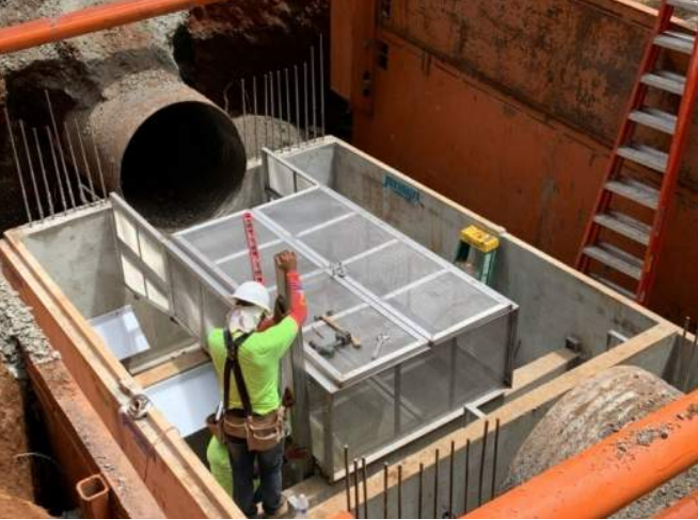
Debris Separating Baffle Boxes – Debris separating baffle boxes sit between storm drains and outlets. They contain filtration screens and storage chambers that trap litter and sediment as storm runoff passes through. Cleaner water is then released into the environment. A few debris separating baffle boxes have been strategically installed with HDOT’s drainage system where they can best treat a large drainage area and make a significant impact on the water quality within our communities.
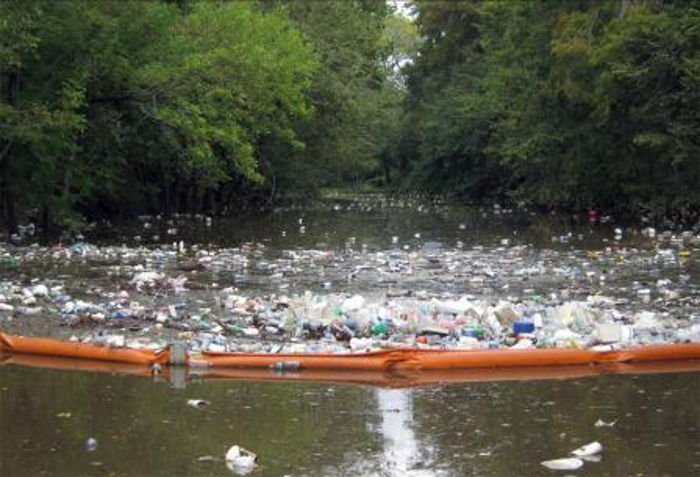
Litter Booms – Little booms are floating barriers designed to prevent trash from drifting into open water. They can stretch across waterways or float along embankments, intercepting debris while allowing fish and wildlife to move freely around them. Because waterways are not within HDOT’s jurisdiction, HDOT does not currently use litter booms. However, you may still see some around Oʻahu that have been installed and are maintained by other entities.