
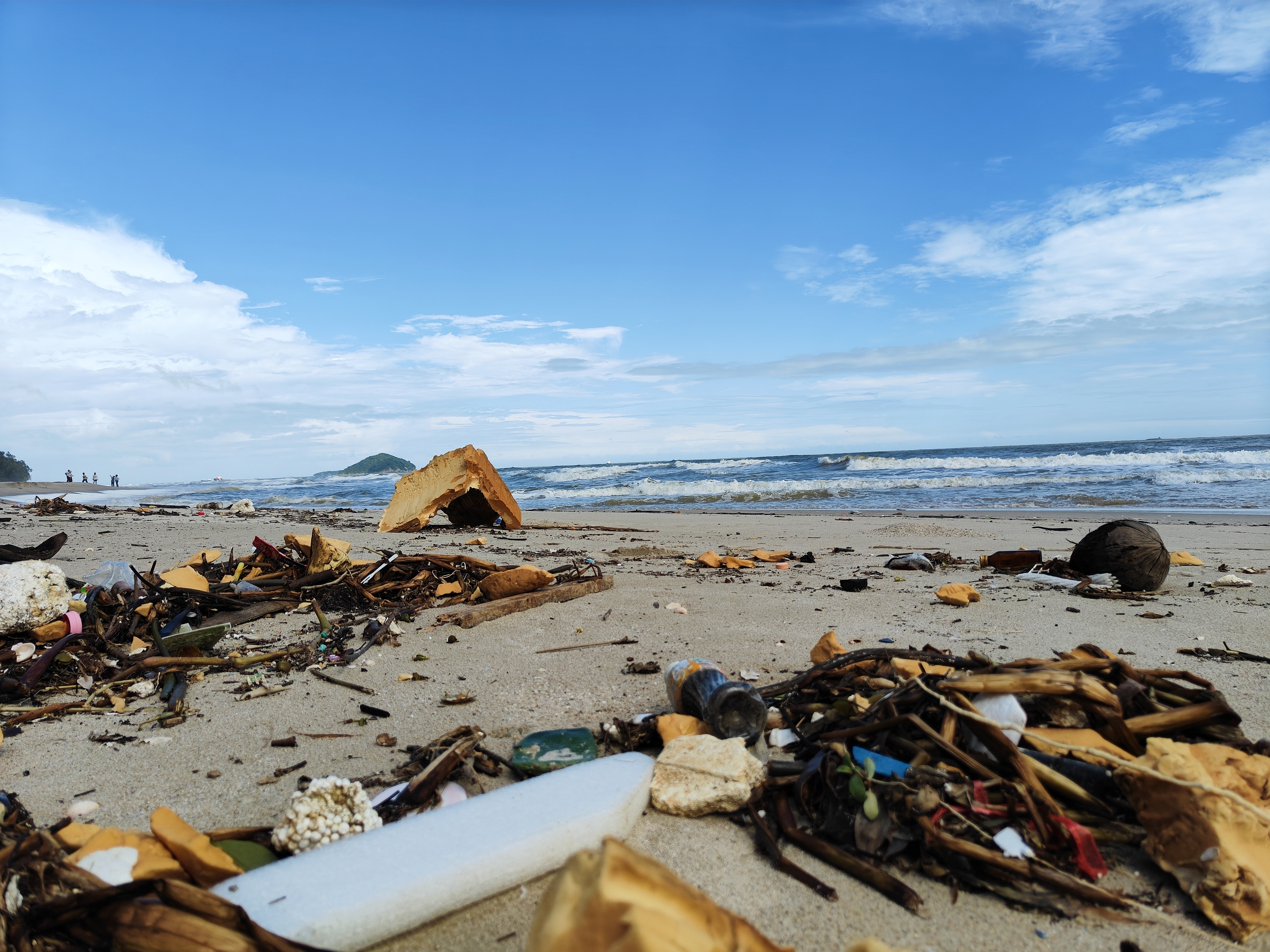
Hawai‘i is home to some of the most beautiful beaches in the world. They are a favorite place to spend time, whether you are visiting or live here year-round. Yet, marine debris threatens these shorelines and the ocean life around them.
A study conducted by Hawai‘i Pacific University’s Center for Marine Debris Research (CMDR) provides insight into the types of marine debris and their sources. The study collected debris from various beaches, and sea surface and sea floor areas, and examined likely sources based on concentration of plastic debris pieces, the polymers that make up the plastic, and weathering patterns on the debris. It identified two main types of plastic: floating plastics (polymers lighter than seawater) and sinking plastics (polymers heavier than seawater).
Floating plastics were more weathered, indicating that they likely come from international sources carried to Hawai‘i by ocean currents and trade winds. These types of debris were found mainly on Windward beaches and the sea surface, although local trash is still a major source of plastics in these areas. Sinking plastics were most often found on Leeward beaches and the seafloor and less weathered, which led the researchers to conclude that they originate from local sources, including residents and visitors, and maritime activities. These plastics can stay on the seafloor or get caught in coral, which puts Hawai‘i’s reef health at risk.
In another study, scientists collected sand from different depths, as deep as one (1) meter, at Kahuku, Kokololio, and Waimānalo beaches over a year. They analyzed the sand to see where the most plastic collects. The study found that 91% of plastic particles are located below the surface of the sand. As a result, a beach can look clean while subsurface plastic remains buried where a typical beach cleanup cannot reach.
Community cleanups can remove large debris such as nets, abandoned vehicles, and large plastic items. But microplastics, often too tiny and numerous to clean up and even hidden underneath layers and layers of sand, create a different challenge. They move through the ocean, enter the food web, and build up over time. This is one reason storm water management and pollution prevention start in our communities and at our local storm drains. In Hawai‘i, storm drains flow directly to the ocean. Anything besides storm water that enters the drain flows there, too.
We have a direct impact on the health of our coastlines. Keep plastics and other debris out of streets, gutters, and storm drains. Small actions help protect the places we swim, dive, and fish in our communities.