
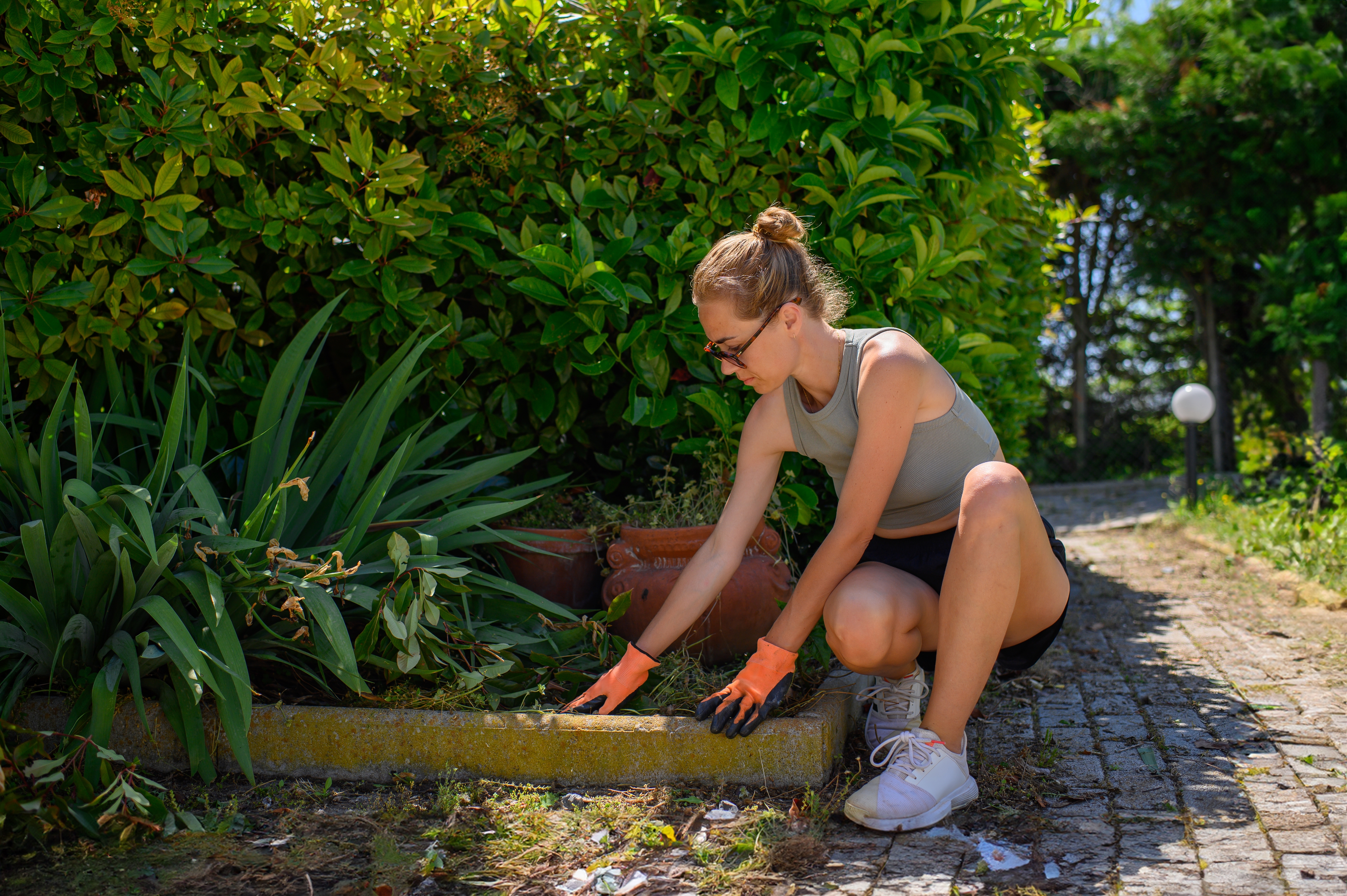
Caring for your yard can feel like a positive step for the environment. But when chemicals enter the picture, they can cause negative impacts beyond your property if incorrectly handled. Even routine yard care can affect our waterways. One of the most common pollutants, grass clippings, seem harmless, but can whisk yard care chemicals like pesticides or fertilizers into the storm drain system. Those yard care chemicals can also wash into storm drains during rain or watering. From there, the runoff flows untreated into the ocean. This can cause nutrient pollution, harmful algae growth, and long-term harm to aquatic life.
The good news is that simple choices help prevent these impacts. If you use yard care chemicals, here are a few ways to reduce harm to the environment.
- Properly Dispose of Green Waste: Green waste, like grass clippings, leaves, and branches, should always be disposed of in your green bin or a Drop-off Center. Don’t forget to deposit it loose, as trash bags are non-compostable and can contaminate the green waste. If green waste is not disposed of properly, it can flow into storm drains and out to the ocean, bringing lawn chemicals with it that harm aquatic life.
- Read the Labels: Use the exact amount recommended on the product label. Excess fertilizer can run off of your yard when it rains, which fuels algae growth in waterways and reduces oxygen in the water. Pesticides and herbicides can poison fish and other aquatic organisms, disrupting ecosystems.
- Time Application: Avoid fertilizing or spraying pesticides before heavy rain. This reduces the chance of chemicals washing off the plants and entering the storm drains.
- Water Wisely: Don’t overwater your plants. Extra water increases runoff and carries chemicals into the storm drain system.
- Properly Dispose of the Product: Never pour leftover chemicals down the drain or on the ground. Take them to a Household Hazardous Waste Facility. On Oʻahu, the City and County of Honolulu hosts regular Household Hazardous Waste disposal events to assist residents with safe disposal. If the bottle is empty, triple-rinse it before discarding. You can also keep the bottle to reuse and refill, which reduces plastic consumption.
- Consider Alternatives: Look for lower-impact options. Compost and organic fertilizers support soil health. Plant native or non-invasive drought-tolerant species to reduce fertilizer and watering needs, and cut down on storm water runoff through plant root absorption. Integrated pest management can further reduce reliance on chemicals. You can even follow our blog to make a DIY vinegar-based weedkiller as an alternative.
Source: EPA – Safe Pest Control, EPA – Household Hazardous Waste